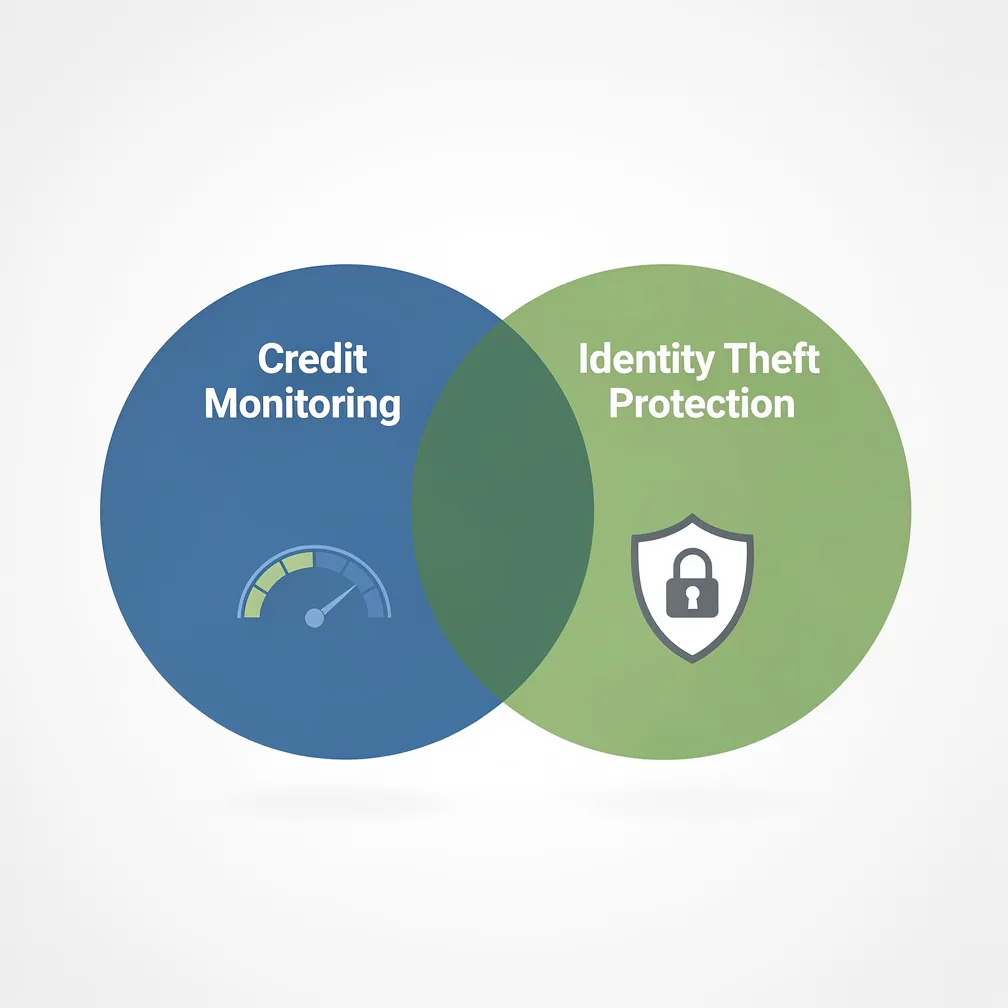
You’ve probably seen advertisements for credit monitoring services and identity theft protection plans, and you might be wondering: aren’t they the same thing? It’s a common source of confusion for consumers trying to protect their financial information. While these terms are often used interchangeably, credit monitoring and identity theft protection are actually distinct services with different scopes of coverage. Understanding the difference between them is essential for making an informed decision about which level of protection you truly need.
The confusion is understandable. Both services aim to protect your personal information and financial well-being, and many companies bundle them together in comprehensive packages. However, credit monitoring focuses specifically on watching your credit reports for changes, while identity theft protection casts a much wider net, monitoring various aspects of your personal information across multiple platforms and providing recovery services if your identity is compromised.
In this guide, we’ll break down exactly what each service offers, compare them side-by-side, and help you determine whether credit monitoring is enough for your needs or if you should invest in full identity theft protection services.
What Is Credit Monitoring?
Credit monitoring is a service that tracks your credit reports from one or more of the three major credit bureaus—Experian, Equifax, and TransUnion—and alerts you to specific changes. Think of it as a watchdog that keeps an eye on your credit activity and notifies you when something new appears or changes on your reports.
When you sign up for credit monitoring, you’re essentially getting regular surveillance of your credit files. The service continuously scans your credit reports and sends you notifications about important changes, helping you spot potential fraud or errors quickly.
Here’s what credit monitoring typically covers:
- Credit score changes: You’ll receive updates when your credit score increases or decreases, often with explanations of what factors influenced the change
- New account openings: Alerts when a new credit card, loan, or other account is opened in your name
- Credit inquiries: Notifications when someone runs a hard inquiry on your credit report
- Changes to existing accounts: Updates about credit limit increases or decreases, account closures, or late payments reported
- Public record additions: Alerts about bankruptcies, liens, or judgments added to your credit file
- Address changes: Notifications if your address is updated on your credit report
Credit monitoring services vary in their comprehensiveness. Some monitor only one credit bureau, while more robust services track all three bureaus simultaneously. The speed of alerts also differs—some services provide real-time or daily notifications, while others send weekly or monthly summaries.
It’s important to understand that credit monitoring is primarily a detection tool. It doesn’t prevent identity theft from happening; instead, it helps you discover suspicious activity quickly so you can take action. The faster you catch fraudulent activity, the less damage it can typically cause to your credit and finances.
What Is Identity Theft Protection?
Identity theft protection is a more comprehensive service that goes far beyond just monitoring your credit reports. While it typically includes credit monitoring as one component, it also watches for misuse of your personal information across a much broader spectrum and provides assistance if your identity is stolen.
Identity protection services recognize that identity theft can occur in many ways that don’t immediately show up on credit reports. Criminals might use your Social Security number to file fraudulent tax returns, access your medical benefits, commit crimes in your name, or sell your information on the dark web—all before any fraudulent accounts appear on your credit report.
Here’s what comprehensive identity theft protection typically includes:
- Dark web monitoring: Scans underground websites and forums where stolen personal information is bought and sold, alerting you if your data appears
- Social Security number monitoring: Watches for unauthorized use of your SSN beyond just credit applications
- Public records monitoring: Tracks criminal databases, court records, and other public sources for misuse of your identity
- Financial account monitoring: Some services monitor bank accounts and credit cards for suspicious transactions
- Medical identity theft monitoring: Alerts you to potential fraud involving your health insurance or medical records
- Identity theft insurance: Coverage for expenses related to identity theft recovery, such as legal fees, lost wages, and document replacement costs
- Identity restoration services: Access to fraud resolution specialists who help you recover your identity, dispute fraudulent charges, and restore your credit
- Lost wallet protection: Assistance canceling and replacing credit cards, IDs, and other documents if your wallet is stolen
The restoration services component is particularly valuable. If your identity is stolen, navigating the recovery process can be overwhelming and time-consuming. Identity theft protection services typically provide dedicated case managers who handle much of the legwork for you, contacting creditors, filing police reports, and working with credit bureaus to remove fraudulent information.
Credit Monitoring vs. Identity Theft Protection: Side-by-Side Comparison
To help clarify the differences between credit monitoring vs identity theft protection, here’s a direct comparison of what each service typically offers:
| Feature | Credit Monitoring | Identity Theft Protection |
|---|---|---|
| Credit score tracking | ✅ | ✅ |
| New account alerts | ✅ | ✅ |
| Credit inquiry notifications | ✅ | ✅ |
| Dark web monitoring | ❌ | ✅ |
| SSN monitoring | ❌ | ✅ |
| Medical identity theft alerts | ❌ | ✅ |
| Financial account monitoring | ❌ | ✅ |
| Identity theft insurance | ❌ | ✅ |
| Identity restoration services | ❌ | ✅ |
| Lost wallet assistance | ❌ | ✅ |
The key distinction is that credit monitoring is a subset of identity theft protection. All comprehensive identity protection services include credit monitoring, but not all credit monitoring services include the broader protections and recovery services that define true identity theft protection.
When Do You Need Each Service?
Now that you understand the difference between these services, the question remains: do i need identity theft protection, or is credit monitoring enough? The answer depends on your personal circumstances, risk factors, and peace of mind preferences.
When Credit Monitoring Alone May Be Sufficient
Credit monitoring might be adequate if you’re primarily concerned about someone opening fraudulent credit accounts in your name and you’re comfortable handling any potential fraud recovery on your own. This option works well for people who:
- Have a limited budget and want basic protection
- Primarily want to track their credit scores and report changes
- Practice strong security habits and have low risk exposure
- Are confident they could navigate identity theft recovery independently
- Haven’t experienced identity theft or data breaches in the past
If you’re working on improving your credit and want to understand how various factors affect your score, credit monitoring provides valuable insights. You can learn more about how this differs from credit repair services in our guide on credit monitoring vs. credit repair.
When You Should Consider Full Identity Theft Protection
Identity protection services become more valuable when you face higher risks or want comprehensive coverage beyond just credit-related fraud. Consider full identity theft protection if you:
- Have been affected by a data breach where your SSN or sensitive information was exposed
- Have experienced identity theft in the past
- Want insurance coverage for potential identity theft expenses
- Prefer having professional assistance available for fraud recovery
- Have children whose identities you want to protect (many services include family plans)
- Are concerned about dark web exposure of your personal information
- Want peace of mind knowing multiple aspects of your identity are monitored
When You Might Need Both (or Combined Services)
In reality, most people benefit from having both types of protection, which is why many modern services bundle credit monitoring and identity theft protection together. Combined services offer the best of both worlds—you get detailed credit tracking along with broader identity monitoring and recovery support.
This comprehensive approach makes sense for anyone who wants robust protection without managing multiple separate services. It’s particularly valuable for individuals with complex financial lives, families with children, or anyone who has already dealt with the stress of identity theft and wants to prevent future incidents.
Top Services That Combine Both Protections
Fortunately, you don’t have to choose between credit monitoring and identity theft protection. Many leading services now offer comprehensive packages that include both types of monitoring along with recovery services.
IdentityGuard provides multi-bureau credit monitoring alongside dark web surveillance and identity restoration services. Their platform combines artificial intelligence with traditional monitoring methods to detect potential threats across various channels.
Aura offers an all-in-one approach that includes credit monitoring from all three bureaus, dark web monitoring, financial account alerts, and white-glove fraud resolution services. They focus on providing a user-friendly experience with a single dashboard for all your protection needs.
MyScoreIQ delivers credit monitoring with identity theft protection features, giving users access to credit scores, reports, and alerts while also watching for broader identity threats. Their service emphasizes helping consumers understand and improve their credit while staying protected.
When evaluating different services, consider factors like which credit bureaus they monitor, the speed and method of alerts, the insurance coverage amounts, the quality of restoration services, and whether family members can be included in your plan. Taking time to compare services side-by-side can help you identify which provider offers the features most important to your situation.
Making Your Decision
Understanding the distinction between credit monitoring vs identity theft protection empowers you to make an informed choice about protecting your financial identity. While credit monitoring serves as a valuable early warning system for credit-related fraud, full identity theft protection provides comprehensive coverage and professional recovery assistance that can save you significant time, stress, and money if your identity is compromised.
For most consumers in today’s digital landscape, where data breaches are increasingly common and identity theft methods are growing more sophisticated, investing in comprehensive identity protection services offers the most complete safeguard. The combination of proactive monitoring across multiple channels and expert restoration support provides both prevention and cure.
However, if your budget is limited or you simply want to keep tabs on your credit activity, starting with credit monitoring is certainly better than having no protection at all. You can always upgrade to more comprehensive coverage as your needs or circumstances change.
The most important step is taking action to protect yourself. Whether you choose basic credit monitoring or full identity theft protection, having some form of monitoring in place significantly improves your ability to detect and respond to fraud quickly. Visit Credit Compare to explore and compare different protection services and find the solution that best fits your needs and budget. Your financial security is worth the investment.
